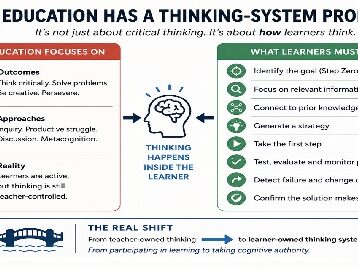
Education increasingly uses the correct language, such as learners must become critical thinkers, creative problem-solvers, self-regulated learners, collaborators and responsible users of artificial intelligence.
Teachers are encouraged to use inquiry, unfamiliar problems, productive struggle, peer discussion, metacognition and higher-order questioning.
These ideas move education away from passive content delivery.
But they leave one question unanswered: What exactly must the learner do inside the problem?
“Think critically” is an outcome.
“Persevere” is an expectation.
“Explain your answer” is an instruction.
None of these provides a thinking system.
A difficult task creates the need for thinking, but it does not provide the process.
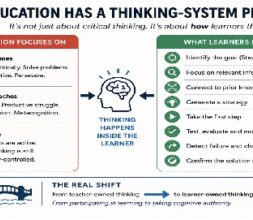
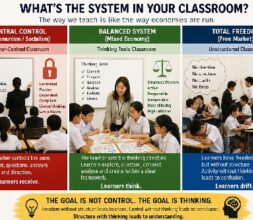
To place the learner inside the problem, the learner must figure out what is required: identify the goal, organise the information, separate what matters from what does not, connect the unfamiliar to prior knowledge, recognise patterns and relationships, generate and test a strategy, detect failure, and change direction when necessary. A classroom can look highly interactive while remaining cognitively controlled by the teacher.
Learners may discuss, work in groups and answer open-ended questions, while the teacher still
The figure out struggle becomes productive when it creates movement from uncertainty towards clarity when a learner who is:
- noticing;
- comparing;
- grouping;
- connecting;
- questioning;
- testing;
- evaluating;
- correcting.
Without this movement, struggle becomes frustration. The choice is therefore not between explanation and abandonment. The teacher must facilitate the learner’s thinking without taking ownership of it.
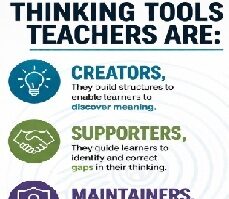
This changes the role of the teacher.
The teacher becomes a thinking-structure architect who designs the cognitive pathway and then becomes a thinking enabler who supports learners through their own thinking journeys.
True learner agency requires more than participation.
The learner gain cognitive authority over the process and learn to ask:
- What are the nature and extent of the problem, using Step Zero?
- What goal must I reach?
- Can I trust my intuition, or must I test it?
- Which information is relevant, and how can it guide my thinking?
- Which patterns or relationships are becoming visible?
- Which strategy appears most appropriate?
- What should my first step be?
- Does my first step create a logical pathway to the next?
- Is my strategy producing meaningful progress?
- Is my calculation progressing logically towards a clear solution?
- Should I persist, adjust the strategy or change direction?
- How will I know that my solution makes sense?
This is the shift education still needs.
Not merely from teacher-centred to learner-centred learning.
Not merely from content delivery to activity.
Not merely from explanation to productive struggle.
The real shift is from teacher-owned thinking to learner-owned thinking systems.
That is when learners stop merely participating in learning and begin taking cognitive authority over it.