Year after year, the same conversation takes place in schools after examinations.
Teachers are disappointed. Principals expected better results. Parents say their children studied. Learners insist they knew the work.
And often, they are right.
The learner attended class, completed exercises, revised thoroughly and worked through past examination papers. Yet in the examination, a question appeared that looked slightly different from the familiar examples.
The learner stopped. That moment interests me more than the final mark. Because the problem may not have been a lack of knowledge at all.
A learner can know the mathematics, remember the formula and understand the method — and still not recognise what matters next when the familiar pathway disappears. That was the mystery that eventually led to The Power of NEXT. The Power of NEXT
The examination changes the cognitive conditions
During classroom learning, support is everywhere. The teacher introduces the topic, selects the examples, highlights important information, asks questions, provides prompts and often recognises when learners are going in the wrong direction.
Even when learners are doing the thinking themselves, someone is nearby who can help restore movement.
Then the examination begins.
The teacher disappears.
The lesson heading disappears.
The scaffold disappears.
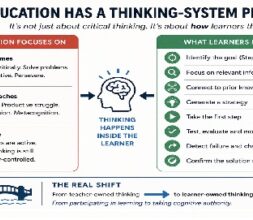
The learner is now required to initiate and regulate their own thinking in what I describe as a relative cognitive vacuum. The Power of NEXT
This means the examination is testing something beyond whether the learner has learned the content. It is also testing whether the learner can continue thinking when the route is no longer obvious.
That is where marks are often lost.
Learning fitness is not the same as exam fitness
Schools are generally very good at developing what I call learning fitness: the ability to make progress while support is available.
Learners become skilled at following explanations, responding to prompts, working with scaffolds and practising known methods.
But exam fitness requires something different.
It is the ability to keep moving once that support has been removed. The Power of NEXT
A learner may therefore be highly successful in the classroom yet become cognitively stranded in the examination.
The crucial question is:
What happens when what the learner knows no longer tells them what to do next?
The memorandum cannot develop what was missed
This is why simply completing more past examination papers may not solve the problem.
A learner attempts a difficult question, gets stuck, checks the memorandum and suddenly says:
“Oh! I see it now.”
But what did they actually see?
Usually, the memorandum revealed the connection they failed to notice while they were stuck.
Once that connection has been shown, the learner can never return to the original cognitive moment and discover it independently. The memorandum reveals the pathway after the event, but it cannot recreate the moment of noticing. The Power of NEXT
More practice certainly has value. It builds familiarity and fluency.
But familiarity alone does not necessarily develop the capability to recognise when a familiar pathway has stopped working.
The missing capability may be cue spotting
This is where cue spotting becomes important.
A cue is something in the available information or situation that becomes significant enough to make the learner reconsider the present direction.
It might be:
- a relationship that has not yet been noticed;
- a condition in the question that suddenly matters;
- an answer that cannot possibly be correct;
- a pattern that breaks;
- a small difference between this question and the familiar one;
- or simply the recognition that the present method has reached a dead end.
The cue does not provide the answer. It creates the possibility of a different direction.
Cue spotting is therefore closely connected to cognitive mobility — the ability to regain movement when familiar knowledge, methods or pathways no longer provide sufficient direction. The Power of NEXT
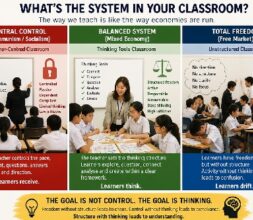
This changes the teacher’s role If this analysis is correct, examination preparation cannot consist only of: teach → revise → practise → mark → correct
Teachers also need to create opportunities in which learners become stuck without immediately being rescued.
They need to learn to recognise where their own thinking stopped, return to what they know, reconsider what may matter and search for another possible route.
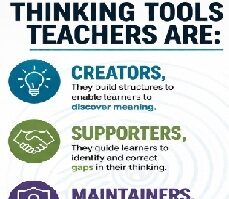
That requires a different kind of teaching expertise.
The teacher must know when to question.
When to scaffold.
When to step back.
And sometimes, when to remain silent.
Because when the teacher supplies the next move, the learner may reach the answer — but the cognitive movement still belongs to the teacher. The Power of NEXT
Perhaps we are asking the wrong question
When examination results disappoint, the usual question is:
Did the learner study enough?
Perhaps we should add another: Did the learner learn what to do when studying was no longer enough?
That may be where some of the missing marks are hiding.
And it raises a much bigger educational question:
Are we preparing learners merely to reproduce familiar pathways — or to recognise when those pathways end and find their own NEXT?
This idea is explored in my new book, The Power of NEXT
Discover the Teaching Secrets Behind Exam Success and Real-Live Achievement
The book is available as a free download from my website.