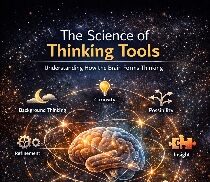
Are you one of those teachers who are doing the right things right but still need the vocabulary to explain yourself, read more about The Science of Thinking Tools
Education often describes teaching in terms of delivery—covering content, completing the syllabus, preparing learners for assessment. But beneath all of this lies a deeper question:
What is the role of the teacher in the formation of thinking?
A Thinking Tools teacher answers this differently.
They are not transmitters of knowledge. They are architects of thinking.
Teaching Beyond Content
When learners struggle, the instinct is often to explain more, give more examples, or simplify the work. Yet many learners continue to struggle—not because they lack exposure, but because they lack structure in their thinking.
Thinking Tools teaching begins here.
It recognises that:
- Learning is not the accumulation of information.
- Learning is the organisation of meaning.
And the teacher plays a central role in enabling this process.
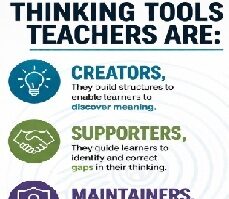
Creators: Building Structures for Meaning
Thinking Tools teachers are creators.
They design learning environments where learners are able to:
- detect patterns
- organise ideas
- construct relationships
They do not simply present answers.
They build structures that allow learners to discover meaning for themselves.
Instead of saying:
- “This is how it works”
- They invite:
- “Let’s build how this works”
Through carefully designed questions, comparisons, and representations, they create the conditions in which understanding can form.
Supporters: Repairing Gaps in Thinking
Every learner experiences moments where their thinking breaks down. This is when Thinking Tools teachers act as supporters.
They:
- identify gaps in understanding
- surface misconceptions
- guide learners to reconnect ideas
They do not rush to correct. They ask:
- What is missing here?
- Where did the thinking shift?
In doing so, they enable learners to repair their own thinking.
Support is not about giving the answer. It is about restoring coherence.
Maintainers: Protecting the Thinking Process
In many classrooms, thinking is unintentionally bypassed:
- learners are given steps
- solutions are demonstrated
- shortcuts are encouraged
Thinking Tools teachers act as maintainers of thinking when they:
- protect the process from being rushed
- slow learners down when needed
- keep attention on meaning rather than procedure
They hold the space where thinking can develop.
They ensure that learners do not simply arrive at an answer—but understand how the answer came to be.
Specialists: Developing Thinking to Its Fullest
A Thinking Tools teacher is also a specialist artisan. Like a master craftsperson, they:
- refine thinking over time
- develop precision in reasoning
- cultivate flexibility and independence
They recognise that thinking is not a once-off event.
It is a developing capability.
Through consistent guidance, learners begin to:
- ask better questions
- detect patterns more quickly
- organise ideas with clarity
Over time, thinking becomes self-sustaining.
The Shift That Matters
Most teaching focuses on: What learners must know
Thinking Tools teaching focuses on: How learners come to know
This shift changes everything.
Learners move from:
- dependence → independence
- confusion → clarity
- repetition → understanding
A Final Thought
A Thinking Tools teacher does not simply prepare learners for the next test.
They prepare learners for thinking itself.
They are:
- Creators of structure
- Supporters of understanding
- Maintainers of process
- Specialists in developing thinking
And in doing so, they enable learners to make sense of the world for themselves.