Use the Field Guide to determine if a school is following the brain-based approach or limiting critical and logical thinking.
This falls in education's blind spot
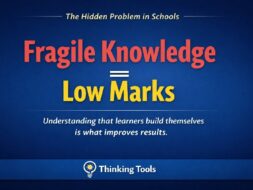
The biggest hidden problem in schools is not what is taught — but that knowledge remains fragile. This happens because learners sit in class, listen carefully, complete their work, and even provide correct answers and depend on memory and imitation
Yet when they are tested later, they struggle to remember, apply, or explain what they have learned. This is frustrating for everyone: teachers feel they have taught the work, learners feel they have studied, and parents question why marks are not improving.
This happens because teaching moves on before understanding is complete and learners are not empowered to build their own understanding, the price is paid later in low marks.
The solution is not more teaching; the solution is inside the brain. For understanding to become strong, the brain needs to organise information, connect ideas, and make meaning. This process cannot be rushed. It must be processed and built by the learner, not simply received from the teacher.
This process starts with Step Zero
This happens when learners think through the work themselves, make connections, and explain ideas in their own way. This type of understanding is strong. It lasts longer and can be applied in new situations.
This difference explains why many learners struggle in exams. Exams do not test what learners heard; they test what learners understand. When learners rely only on what the teacher explained, they struggle when questions change, forget under pressure, and produce inconsistent results. However, when learners build their own understanding, they are able to adapt to new questions, think independently, and improve their marks naturally.
Did you know that all learners have inborn Thinking Tools
Thinking Tools helps learners learn in a way that makes understanding stick. It makes thinking visible, helps learners organise ideas, and guides them to build their own understanding. Instead of simply receiving information, learners begin to see how ideas fit together, understand why something works, and take ownership of their learning.
Marks do not improve when learners hear more. Marks improve when learners understand more. And understanding only becomes strong when learners are given the opportunity to build it themselves.
.