Four Books --One Shift


Redesigning education around the architecture of thinking
Training of teachers and tutoring of learners are based on the research of the following books.
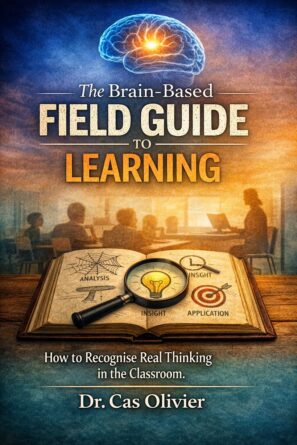
This practical guide functions as a litmus test for brain-based learning, helping teachers distinguish between traditional instruction and teaching that genuinely activates the thinking processes of learners.
It assists educators to determine if real thinking is taking place in their classrooms.
The guide can also be used by school leaders and education departments to determine whether teaching aligns with brain-based learning principles.
Parents can determine whether schools and universities still rely on traditional instruction or whether they truly deliver 21st-century learning.
Read more about the litmus test for optimised teaching and learning.
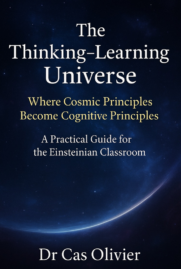
SUMMARY of the book no educational institution or school can ignore
Click HERE to read Chapter 1 : The Cosmic Origin of Learning for free.
Both the following articles are important anchors of the content of the book.
This is an article in the STEM Magazine January 2025 edition on brain-based teaching.
This is an article in the STEM Magazine November 2025 edition on Step Zero.
Read more on the BLOG
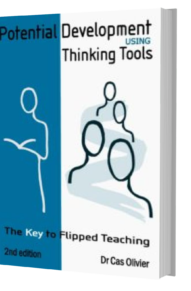
More about the Thinking Tools approach to learning
Homo sapiens is destined to think, and thus all information on earth is created by human brains. It is general knowledge that the brain is a knowledge creator. This is acknowledged everywhere in the world, except in schools where learners’ brains are turned into knowledge duplicators. This is in stark contrast with the meaning of “sapiens”, which is “wise”.
The result is that the school system produces school-leavers who are memorising-fit and not thinking-fit.
This book is a practical guide to enable teachers to empower learners to engage with Thinking Tools which enable them as school leavers to gain insight and solve problems.
During learning Thinking Tools serve as thinking scaffolds which guide learners towards self-regulated learning steered by metacognition.

The education system fails to develop the potential of learners to the maximum. Voices from the world of work and tertiary institutions make it clear that school leavers have little to offer in terms of knowledge since they forgot most of what they memorised, and they lack competencies to gain insight in new challenges and to solve problems.
This book addresses these challenges.
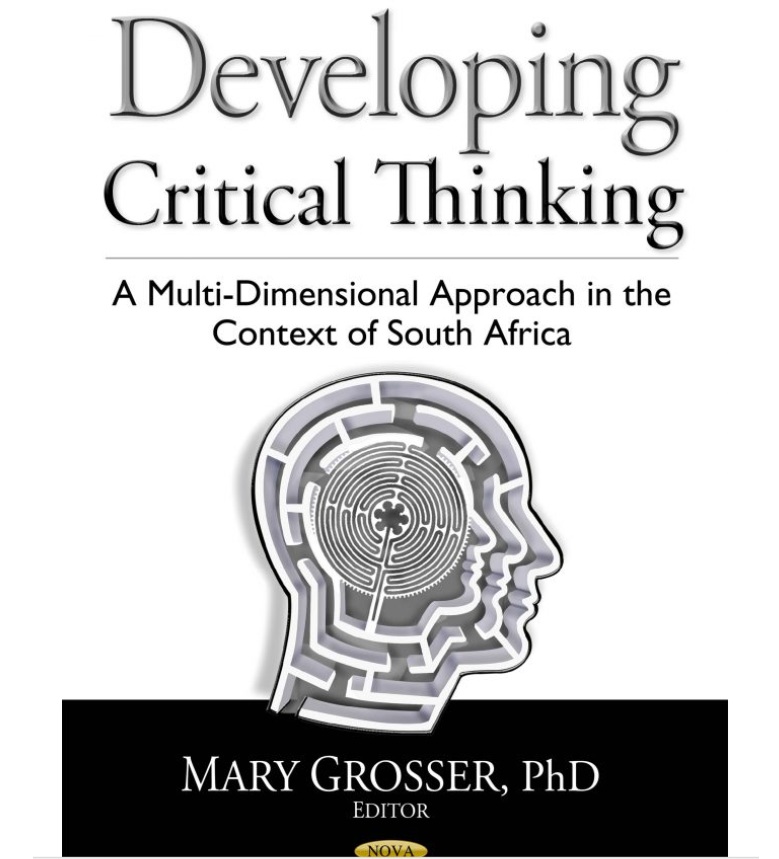
This book is a comprehensive resource that offers a generic, multi-dimensional approach to the development of critical thinking as an academic and life skill in a variety of contexts, namely formal, informal and non-formal. It argues for a breakdown of the divides between the different role players and systems where critical thinking is taught. This book also focuses on the application of theory pertaining to the conceptualization of critical thinking, and provides generic guidelines for teaching critical thinking in the South African context and elsewhere. Various examples of exploratory, evidence–based research in the South African context elucidate the status quo regarding the development of critical thinking skills at school and higher education levels. The evidence-based research also demonstrates the efficacy of selected strategies that have the potential to assist in the development of good critical thinking skills in and beyond classrooms.
GET IN TOUCH
VISIT US ON SOCIAL MEDIA
Join Thinking Tools for creative accelerated learning (English group)
Join Thinking Tools for creative accelerated learning (Afrikaans group)
Go the Thinking Tools Way For Creative Accelerated Learning
©2026 LearningDesigns. All Rights Reserved